Biomedical and Pharmaceutical Sciences Research Group (BPSRG)
About
The Biomedical and Pharmaceutical Sciences Research Group is an interdisciplinary group shared by Kingston University and St George's Hospital Medical School. Its mission is to:
i) contribute significantly to knowledge of diseases in humans and animals, and
ii) apply a molecular understanding to these processes and their treatment.
The BPSRG is organised into the following complementary themes:
- Parasitology and Microbiology
- Haematology/Immunology/Cancer Biology
- Biomedical, Pharmaceutical and Instrumental Analyses
- Medicinal and Pharmaceutical Chemistry
- Clinical Pharmacy and Advanced Drug Delivery
- Nutrition/Exercise and Sports Science
Research in parasitology is broad and encompasses fundamental taxonomy, parasite transmission, the role of vectors and intracellular parasites, migration within the host, elucidation of their biochemical pathways and parasite drug responses at the cellular level.
Haemopoietic stem cells are used as a therapeutic approach to treat a wide range of haemopoietic and non-haemopoietic disorders. Current projects include the investigation of mechanisms which control normal haemopoiesis within the bone marrow microenvironment and enable stem cells to home to the bone marrow after transplant. This work relies on live cell imaging techniques, with the use of immunofluorescence and confocal laser scanning microscopy. Our research also aims to investigate the function of important stem cell receptors through the use of metabolomic and proteomic profiling of these rare cells.
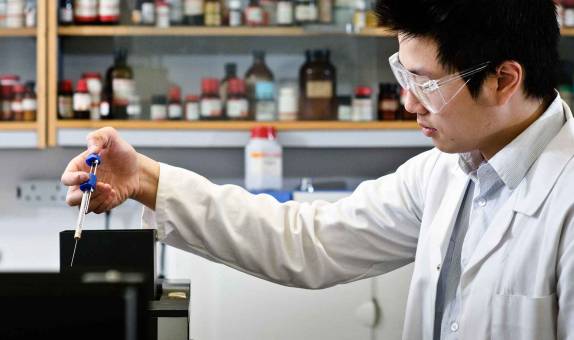
Analysis is at the core of most of our activities, ranging from studying basic disease processes to developing new drugs which require analyses for characterisation and pharmacokinetic studies. In the field of instrumental analyses, novel fibre-optic laser based sensors are under development for physiological measurements and analyses of foodstuffs.
Drug development projects are underway with a focus on anti-cancer, anti-arthritic, anti-malarial and anti-inflammatory agents and the accompanying development of synthetic routes. Computer molecular modelling studies on enzyme mechanisms are generating leads for the design, syhtheses and characterisation of novel inhibitors of estrone sufatase and aromatase as new anti-cancer agents. A number of studies are aimed at exploring, in detail, the mechanisms of action of front line therapies (such as Tamoxifen).
A number of approaches are being developed to enhance drug efficacy by targeting to diseased tissues and sub-cellular components. These include bioreductives, nanoparticles and liposomes. Novel slow release formulations are under development alongside models for assessment of drug delivery.
Researchers are investigating the effects of diet and exercise on health and disease. Current projects include assessment of treatments for muscle damage and physiology of sporting activities with special reference to the quantification and prescription of training. Other lead projects include investigating the effects of mineral and vitamin supplements on health and disease, novel anti-oxidants, the interaction of foodstuffs with prescription drugs, the comparative effects of breast feeding versus formula feeding, the effects of moderate exercise on health and disease and the efficacy and safety of herbal medicines.
New Master of Science by Research degrees in the School of Life Sciences
The School of Life Sciences at Kingston University is pleased to announce the availability of a number of full or part-time MSc by Research projects in the subject areas listed below
The School is part of a dynamic Faculty with a keen research focus and much of the School's multidisciplinary research takes place within the Biomedical and Pharmaceutical Sciences Research Group (BPSRG). The BPSRG engages actively in interdisciplinary collaborative research, and has established excellent relationships with many national and international research groups and industrial partners.
The School has invested heavily in the development of its laboratories and equipment for bioscience teaching and research, and has access to a number of core specialist instrumentation laboratories. The duration of the MSc by Research is one calendar year full-time or two calendar years part-time. The tuition fees for the 2011-12 academic year are £3700 (pro rata for part time students) for UK or EU students and £11000 for other overseas students, plus a bench fee of £2000. To apply, please contact the named person below associated with your area of general interest to discuss your proposed project.
| Area | Contact |
|---|---|
| Biochemistry/Bioinformatics | Dr Gary Forster-Wilkins (G.Forster-Wilkins@kingston.ac.uk) |
| Cancer Biology/Cancer Therapeutics | Dr Helmout Modjtahedi (H.Modjtahedi@kingston.ac.uk) |
| Chemical Biology/Natural products: | Prof Declan Naughton (D.Naughton@kingston.ac.uk) |
| Clinical Chemistry/Haematology: | Mr Paul Waller (Paul.Waller@kingston.ac.uk) |
| Diabetes/ Pancreatic Disease | Dr Natasha Hill (N.Hill@kingston.ac.uk) |
| Invertebrate Ecology | Dr Richard Cook (R.Cook@kingston.ac.uk) |
| Microbiology | Dr Mark Fielder (M.Fielder@kingston.ac.uk) |
| Molecular Genetics / Biotechnology | Dr Lori Snyder (L.Snyder@kingston.ac.uk) |
| Molecular Parasitology /Cell Biology | Dr Tony Walker (T.Walker@kingston.ac.uk) |
| Molecular Microbiology | Prof Andrey Karlyshev (A.Karlyshev@kingston.ac.uk) |
| Nutrition | Dr Elizabeth Opara (E.Opara@kingston.ac.uk) |
| Oncology/DNA Damage and Repair/Genetics | Dr Lucy Jones (L.Jones@kingston.ac.uk) |
| Public Health/Food Safety/Functional Foods | Prof Andrea Petroczi (A.Petroczi@kingston.ac.uk) |
| Sports and Exercise Science | Dr Owen Spendiff (O.Spendiff@kingston.ac.uk) |